Madagascar

Madagascar was one of the last major habitable landmasses on earth to be settled by humans. While there is some evidence of human presence on the island in the millennia B.C., large-scale settlement began between A.D. 350 and 550 with settlers from present-day Indonesia. The island attracted Arab and Persian traders as early as the 7th century, and migrants from Africa arrived around A.D. 1000. Madagascar was a pirate stronghold during the late 17th and early 18th centuries and served as a slave trading center into the 19th century. From the 16th to the late 19th century, a native Merina Kingdom dominated much of Madagascar. The French conquered the island in 1896 and made it a colony; independence was regained in 1960.

Total: 587,041 sq km | land: 581,540 sq km | water: 5,501 sq km

Island it has no land borders | Coastline 4,828 km

Population total: 29,452,714 | male: 14,760,501 | female: 14,692,213 (2024 est.)

Malagasy/Malagache

Ethnic groups

Malayo-Indonesian (Merina and related Betsileo), Cotiers (mixed African, Malayo-Indonesian, and Arab ancestry – Betsimisaraka, Tsimihety, Antaisaka, Sakalava), French, Indian, Creole, Comoran

Languages

Malagasy (official) 99.9%, French (official) 23.6%, English 8.2%, other 0.6% (2018 est.)

Note: shares sum to more than 100% because some respondents gave more than one answer on the census.

Religions

Church of Jesus Christ in Madagascar/Malagasy Lutheran Church/Anglican Church 34%, Roman Catholic 32.3%, other Christian 8.1%, traditional/Animist 1.7%, Muslim 1.4%, other 0.6%, none 21.9% (2021 est.)

Madagascar’s youthful population – nearly 60% are under the age of 25 as of 2020 – and moderately high total fertility rate of more than 3.6 children per woman ensures that the Malagasy population will continue its rapid growth trajectory for the foreseeable future. The population is predominantly rural and poor; chronic malnutrition is prevalent, and large families are the norm. Many young Malagasy girls are withdrawn from school, marry early (often pressured to do so by their parents), and soon begin having children. Early childbearing, coupled with Madagascar’s widespread poverty and lack of access to skilled health care providers during delivery, increases the risk of death and serious health problems for young mothers and their babies.

Child marriage perpetuates gender inequality and is prevalent among the poor, the uneducated, and rural households – as of 2018, 40% of Malagasy women aged 20 to 24 were married. Although the legal age for marriage is 18, parental consent is often given for earlier marriages or the law is flouted, especially in rural areas that make up approximately 60% of the country. Forms of arranged marriage whereby young girls are married to older men in exchange for oxen or money are traditional. If a union does not work out, a girl can be placed in another marriage, but the dowry paid to her family diminishes with each unsuccessful marriage.

Madagascar’s population consists of 18 main ethnic groups, all of whom speak the same Malagasy language. Most Malagasy are multi-ethnic, however, reflecting the island’s diversity of settlers and historical contacts (see Background). Madagascar’s legacy of hierarchical societies practicing domestic slavery (most notably the Merina Kingdom of the 16th to the 19th century) is evident today in persistent class tension, with some ethnic groups maintaining a caste system. Slave descendants are vulnerable to unequal access to education and jobs, despite Madagascar’s constitutional guarantee of free compulsory primary education and its being party to several international conventions on human rights. Historical distinctions also remain between central highlanders and coastal people.

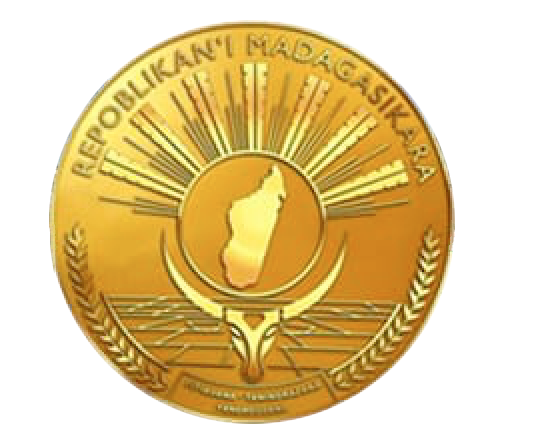
Republic of Madagascar | Republique de Madagascar | Repoblikan’i Madagasikara

(the name “Madageiscar” was first used by the 13th-century Venetian explorer Marco POLO, as a corrupted transliteration of Mogadishu, the Somali port with which POLO confused the island)

Capital: Antananarivo (he name, which means “City of the Thousand,” was bestowed by 17th century King ADRIANJAKA to honor the soldiers assigned to guard the city)

Independence: 26 June 1960 (from FRANCE)

2007 Country Report https://www.civicus.org/media/CSI_Mozambique_Country_Report.pdf 

Partner organisation: JOINT https://joint.org.mz/ 

Assessment (2014/2015) by Liga de ONGs em Moçambique (JOINT).  https://www.civicus.org/images/EENA_Mozambique_English.pdf  Findings from the report highlight that the Law on Associations that regulates formation of CSOs needs to be revised to be more specific on issues such as the relationship between civil society and the government at different levels. Other challenges facing CSOs are around access to different funding sources which is hindered by a lack of capacity within CSOs to formulate project proposals as well as CSO not being formally registered, especially in the case of small rural-based organisations. CSOs in Mozambique have also had to fight for the space to have open discussions with governing bodies to influence development policies and legislation. 

UNDP (2011) Lessons from implementing CIVICUS CSI index – https://www.undp.org/sites/g/files/zskgke326/files/migration/mz/Participatory-Civil-Society-Assessments-Report.pdf 

* 2023: HRW warned that a draft law regulating NGOs and CSOs posed a danger to freedom of association and the freedom to operate. https://www.hrw.org/news/2023/02/10/mozambique-draft-law-threatens-civil-society-groups

Semi-presidential republic

Constitution

history: previous 1992; latest passed by referendum 17 November 2010, promulgated 11 December 2010

amendments: proposed by the president of the republic in consultation with the cabinet or supported by a least two thirds of both the Senate and National Assembly membership; passage requires at least three-fourths approval of both the Senate and National Assembly and approval in a referendum; constitutional articles, including the form and powers of government, the sovereignty of the state, and the autonomy of Madagascar’s collectivities, cannot be amended.

Legal system

civil law system based on the old French civil code and customary law in matters of marriage, family, and obligation

International law organization participation.

accepts compulsory ICJ jurisdiction with reservations; accepts ICC jurisdiction.

Chief of state: President Andry RAJOELINA (since 16 December 2023)

Head of government: Prime Minister Christian NTSAY (since 6 June 2018)

Cabinet: Council of Ministers appointed by the prime minister

Elections/appointments: president directly elected by absolute majority popular vote in 2 rounds if needed for a 5-year term (eligible for a second term); election last held on 16 November 2023 (next to be held in November 2028); prime minister nominated by the National Assembly, appointed by the president

Election results:

2023: Andry RAJOELINA reelected president in first round; percent of vote – Andry RAJOELINA (TGV) 59.0%, Siteny Thierry RANDRIANASOLONIAIKO 14.4%, Marc RAVALOMANANA (TIM) 12.1%, other 14.5%

2018: Andry RAJOELINA elected president in second round; percent of vote in first round – Andry RAJOELINA (TGV) 39.2%, Marc RAVALOMANANA (TIM) 35.4%, other 25.4%; percent of vote in second round – Andry RAJOELINA 55.7%, Marc RAVALOMANANA 44.3%

Bicameral Parliament consists of:

Senate or Antenimierandoholona  (18 seats; 12 members indirectly elected by an electoral college of municipal, communal, regional, and provincial leaders and 6 appointed by the president; members serve 5-year terms)

National Assembly or Antenimierampirenena (151 seats; 87 members directly elected in single-seat constituencies by simple majority vote and 64 directly elected in multi-seat constituencies by closed-list proportional representation vote; members serve 5-year terms)

Elections: Senate – last held on 11 December 2020 (next to be held in December 2025)

National Assembly – last held on 27 May 2019 (next to be held on 29 May 2024)

Election results: Senate – percent of vote by party – NA; elected seats by party – Irmar 10, Malagasy Miara Miainga 2; composition – men 17, women 1, percentage women 5.6%

National Assembly – percent of vote by party/coalition – IRD 55.6%, TIM 10.6%, independent 30.5%, other 3.3%; seats by party/coalition – IRD 84, TIM 16, independent 46, other 5; composition – men 123, women 28, percentage women 18.5%; total Parliament percentage women 10.7%

Assemblée nationale – Antenimierampirenena
Palais de Tsimbazaza, B.P. 704, 101
ANTANANARIVO
Madagascar

+261-20329606800 | +261-20348183409

[email protected]
https://assemblee-nationale.mg

The PFNOSCM/VOIFIRAISANA is neither a union nor a federation nor a confederation nor a consortium but:

1- A place for dialogue, exchanges, guidance, inspiration and cooperation for civil society organizations sharing a common vision of development challenges in Madagascar. These organizations are committed to working together to contribute to solving these problems for the benefit of the populations of the 22 regions, particularly the most disadvantaged.

2- A space dedicated to exchanges, dialogue, and the strengthening of constructive partnerships between civil society organizations in Madagascar and their various partners – State, private sector, technical and financial partners, etc. – at the national and international levels. In this sense, the PFNOSCM/VOIFIRAISANA is the privileged interlocutor of the State and other partners in national dialogues on development issues. It can also play an interface role with other actors at the regional and global levels.

3- A place for preserving and strengthening the unity and autonomy of civil society vis-à-vis other actors.

4 – the meeting place for various sensitivities of civil society organizations, the preservation of their diversity and their entrepreneurial spirit while strengthening their cohesion based on a common vision and common objectives;
5- a place for capacity building of Malagasy civil society organizations and a network of multi-sectoral skills;
6- a place for Information and Communication of Malagasy civil society internally and externally;
7- the body for general orientation, coordination, monitoring and evaluation of the
overall movement of civil society in Madagascar;
8- the guardian of the COMMON CHARTER of civil society organizations in
Madagascar.

Email: [email protected]
https://pfnoscm-sociétécivilemalagasy.com

Country Focus

Angola

Botswana

République démocratique du Congo

Eswatini

Lesotho

Madagascar

Malawi

Mauritius

Moçambique

Namibia

Republic of South Africa

Seychelles

Union of Comoros

Zambia

United Republic of Tanzania

Zimbabwe

Country Updates

Events

Scroll to Top